
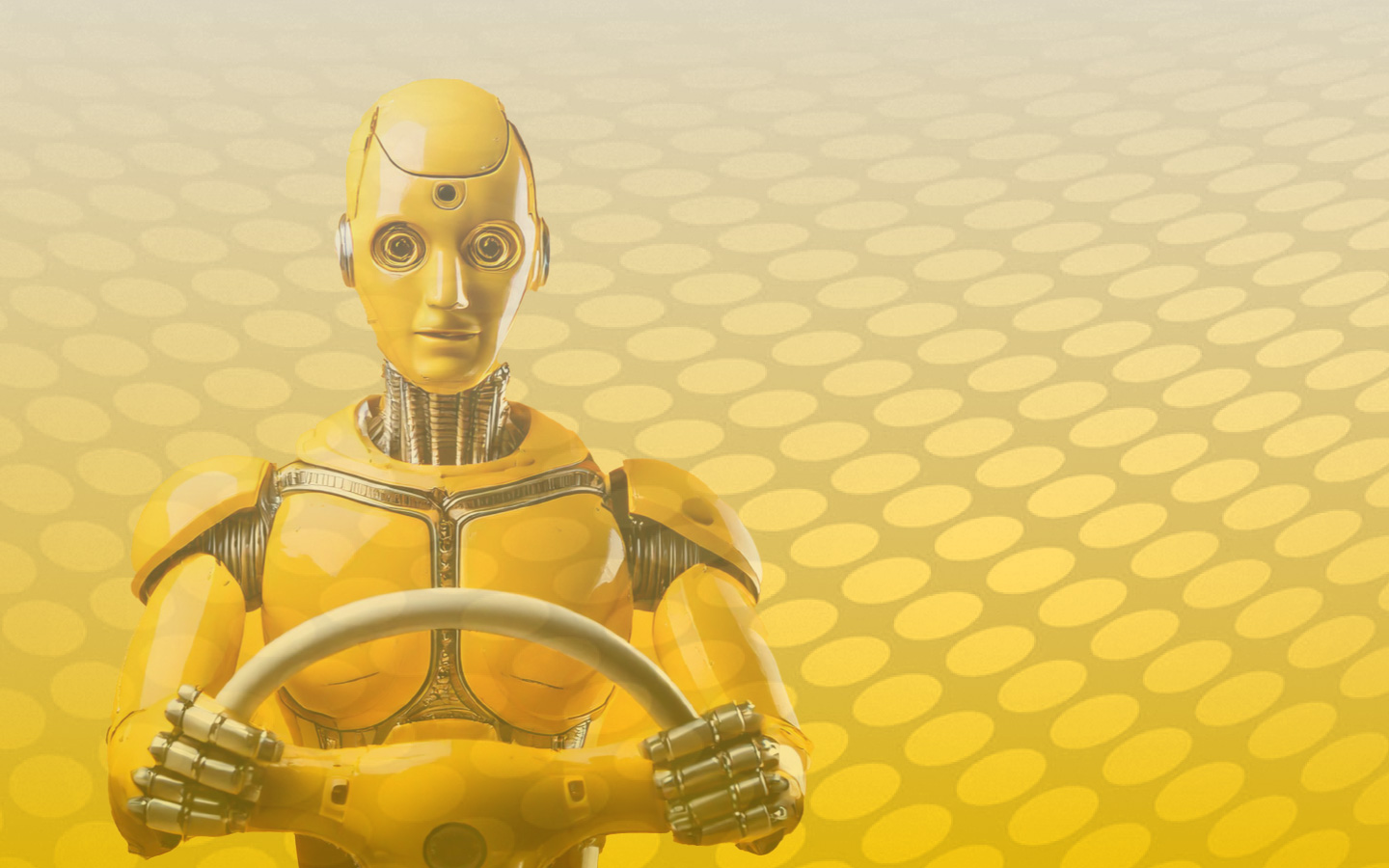
WE DRIVE YOUR VEHICLE. EVERYWHERE.
PRECISE | RELIABLE | EFFICIENT
Robot systems that redefine vehicle testing
Whether you run endurance tests on a chassis dynamometer or execute dynamic maneuvers on proving grounds, repeatability decides. With our robot systems you control vehicles reproducibly and safely. Depending on the setup, speed accuracy up to ±0.5 km/h and a lateral deviation tolerance around ±2 cm can be targeted. This helps you meet strict WLTP and ADAS requirements and turn test time into reliable comparable data.
Our portfolio, robot systems built for every test task
One provider, one modular architecture, multiple specialised systems. In practice, teams pair robot drivers for repeatable cycles with steering robots for stable lateral guidance and proving‑ground driving systems for automated outdoor maneuvers. Actuators and robot shifters extend this setup where pedals and gear changes must stay consistent. Modular hardware plus standardised, or manufacturer‑specific, interfaces support integration into existing processes across the full lifecycle.


STÄHLE GmbH has produced and delivered over 1,400 systems in total for more than 200 customers worldwide.
Welcome to our strong partnership!
More Info
1) Robot Drivers, repeatable cycles on chassis dynamometers
Our Robot Drivers enable computer‑controlled driving with humanlike drive styles and high repeatability. This supports emission testing, mileage accumulation, climate tests and correlation work on chassis dynamometers.
- Fast installation without vehicle modification
- Suitable solutions for cars, trucks and motorcycles
- Profound knowledge for cycles beyond WLTP, EPA and FTP‑75 contexts
By aligning cycles, tolerances, driving styles, and by implementing data interfaces, you can quickly produce results comparable across teams and test cells.
2) Steering Robots, consistent lane keeping for ADAS maneuvers
For proving ground application, lateral control must stay within tight boundaries. A common example is keeping test speed within ±0.5 km/h and the transverse deviation to the target trajectory within ±2 cm. Our Steering Robots support scenarios such as AEB, lane keeping and lane change, with millisecond level synchronisation to other robotic modules.
- Compatible with typical AEB and lane keeping scenarios
- Quick installation thanks to clamping concept
- Adaptive to all steering wheel designs and sizes including yoke design
- Airbag remaining active for safety driver
- No wind screen usage as a support
- Prepared for vehicle dynamics maneuvers such as Fishhook or J‑Turn
Defined boundary conditions, safety assessments, maneuvers, tolerances and stop strategies are consistent across repeated runs.
3) Actuators, pedal automation with defined force and feedback
In many setups, longitudinal control depends on reliable accelerator and brake actuation. Our actuator portfolio supports fast and robust installation on or below the driver seat and with repeatable set-point control.
- Brake actuation forces up to 2.000 N (depending on setup)
- Fail-safe concepts with mechanical return positions (model dependent)
- Expandable actuator configurations for additional functions
If EMC compatibility is part of the test requirement, our actuators for EMC testing are the relevant product category.
4) Robot Shifters, gearbox cycles with defined timing
Repeatable shift execution is critical for powertrain and durability testing. Our Robot Shifters are designed for controlled shifting on test stands and can be configured with options such as additional measurements and interfaces.
- Solutions for transmission and powertrain test stands
- Controlled actuation with defined motion and force
- Options depending on test setup and integration needs
In many test environments, a Robot Shifter is linked with actuator modules for clutch and pedal functions to keep full sequences stable.
5) Proving ground driving systems, automated driving on test tracks
Outdoor test programmes benefit when the vehicle can be guided automatically and safely. Our proving ground driving systems cover driverless or hybrid operation, depending on the scenario and safety concept.
- Configurations for cars and commercial vehicles
- Safety features with software and hardware watchdogs (system dependent)
- Integration interfaces for fleet management and synchronizations with soft-targets.
Drive-by-wire designed vehicles can also be controlled as would they be actuated controlled via SDrive. Further a pneumatical emergency brake actuator for driverless operation can be added to brake pedal actuator or as stand-alone e.g. autonomous vehicles.
Software and accessories, the modular layer on top
A robot system becomes efficient when control, data and interfaces are consistent across environments. The DriverModule helps keep a consistent driver concept from simulation to proving ground. For practical integration and mounting, the accessories catalogue supports common sensor and device setups.
Benefits of robotic testing, precision and safety you can scale
Automation pays off when it reduces variance and falicitates more time for analysis. In practice, robotic testing stabilises boundary conditions and improves comparability across vehicles, software versions and environments. Key benefits in day‑to‑day test operations include:
- Precision through repeatability and defined tolerances
- Safety by keeping drivers out of critical maneuvers
- Productivity for long duration runs and repeat cycles
- Process stability with documented setups and consistent interfaces
- Support paths for commissioning, operation and maintenance
Stähle has produced and delivered over 1,400 systems in total for more than 200 customers worldwide. Quality Targets are backed by a documented quality management system according to DIN EN ISO 9001:2015.

Applications, from WLTP cycles to ADAS validation
Robot systems are used wherever tests must stay comparable across long programmes and many repetitions. Typical application areas span both lab and outdoor environments.
- Chassis dynamometer work such as emission, climate, endurance and range detection
- Proving ground maneuvers for ADAS validation or dynamic tests
- Component and powertrain testbeds with controlled actuation sequences
For an application oriented entry point, start with chassis dynamometers and proving grounds. For system context and technology direction, history and vision provide the official background.

About Stähle, engineering depth built over decades
Founded in 1984, Stähle first delivered technologically challenging solutions in measurement, regulation and medical equipment, including safety regulating valves for operating temperatures from -265°C to +200°C. Since 1987 the focus has shifted to automotive applications with robotics, electronics and software. As a second generation family enterprise with CAM-assisted CNC machinery, Stähle combines engineering and manufacturing depth with practical experience across chassis dynamometers and proving grounds.
LEARN MORE
FAQ, common questions about robot systems
Below you find concise answers to questions we often receive from test teams and engineering departments.

Stähle GmbH · Maybachstraße 12 · 71299 Wimsheim · Germany

+49 (0) 7044 91561-0

