
Robot Drivers

SAP2000
Autopilot for cars

SAP2000T
Autopilot for trucks

SAP2000LC
Autopilot for cars

SAP2VP-ACT
EMC Actuator for accelerator+brake+clutch pedal+shiftarm

SAP-RAPID
Autopilot for cars

SAP-RAPID-HE-TRUCK
Autopilot for trucks & busses

SMC2000
Autopilot for motor cycles
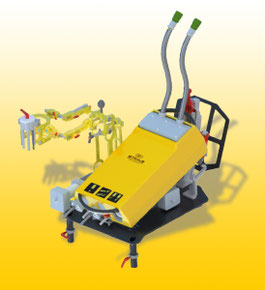
SAP2000V
EMC Autopilot for cars
STÄHLE Robot Drivers – Autopilot for Your Tests
Robot drivers help create repeatable test conditions and reliable measurement data. Within the STÄHLE Autopilot portfolio, modular actuators, humanlike drive profiles and dedicated control software work together to reproduce maneuvers on the chassis dynamometer and on the proving ground — from emission and range test to NVH and ADAS. Installation is quick and designed for minimal vehicle intervention, while correlation stays traceable throughout the process. STÄHLE combines robust hardware with field-proven workflows for development, validation and verification. For an overview of the modules, see products, and for methods and typical scenarios, visit applications. This helps teams reduce variance between vehicles and calibrations and work with more consistent test data.
Robot drivers explained – a consistent driver for repeatable testing
Robot drivers automate longitudinal and lateral control inputs, maintain defined tolerances and reproduce realistic driving styles. The architecture is modular: steering, throttle, brake, clutch and shifting are combined as required and scaled for passenger cars, trucks and motorcycles. The result is highly repeatable maneuvers and short setup times. For complementary modules, explore steering robots as well as actuators for pedals and other actuation tasks.
Robot drivers in use – from chassis dynamometers to proving grounds
Across the development process, robot drivers cover key scenarios. The following application areas show the path from the lab to the road:
- Chassis dynamometer: drive cycles, endurance, climate and correlation with repeatable speed and load control.
- Proving ground / ADAS: precise path following, hybrid or driverless operation for demanding maneuvers.
- Component testbeds / powertrain: constant actuation and reproducible shifting for valid comparisons.
- Simulation (SiL / HiL): the identical “driver” across all stages as the basis for lab-to-road consistency.
For path following, redundancy and hybrid scenarios, the relevant module family is proving-ground driving systems. For EMC-related scenarios, EMC actuators are available.
Robot drivers on the chassis dynamometer – one setup, many cycles
On the chassis dynamometer, the robot driver shows its strengths: humanlike profile control, highly repeatable speed and load control and short setup times. Once a setup has been configured, it can reliably reproduce emissions, endurance and climate cycles, with clear tolerance bands and trace comparison for correlation. The modular architecture allows steering, pedal and shifting modules to be combined so that different test programs can be covered without changing the basic setup. Connection to host systems and DAQ is handled through standardised interfaces. For reproducible gearshift sequences, see robot shifters.
Robot-assisted component testing – constant actuation, valid data
In component testing, robotic actuation provides constant actuation for powertrain, clutch, brake and shifting tasks – ideal for NVH comparisons, calibration studies and endurance programs. Instead of person-dependent variance, the robotic setup delivers measurably stable cycles while forces, travel and speeds stay within defined tolerances. This makes small effects visible and development decisions more robust. Integration is achieved via modular actuators and flexible mounting concepts. EMC scenarios can be covered with shielded components. Further details can be found in the respective product families.
Robot drivers: technology and software for reproducible maneuvers
Robot-driver technology combines a real-time control core with modular actuators and software that consistently manages profiles, tolerance bands and traces. This creates a setup that adapts quickly to the test bench and the proving ground while delivering reproducible results.
- Deterministic control with safety mechanisms and a fail-safe concept.
- Modular actuators for steering, pedals and shifting that can be combined depending on the use case.
- Robot-driver software with profile editor, tolerance bands and trace import/export.
- Standardised interfaces to host systems and DAQ, including open data formats.
- Versioning, parameter management and audit trail for transparent approvals.
The hardware remains modular while the software ensures comparability: sequences are configured once and validated using traces, while subsequent adjustments follow a model-based approach. For path following and hybrid operation on the proving ground, the corresponding proving-ground driving functions are available. Shifting events can also be reproduced consistently.
Maneuvers and trace comparison in practice
Complex maneuvers – from constant-speed runs to load steps or ADAS sequences – are defined as profiles with clear tolerances. During the run, the software records measured traces, compares them with target values in real time and flags deviations. This makes correlation, repeatability and approvals clear, traceable and easy to document.
Robotic control instead of guesswork – less variance on the chassis dynamometer
Where manual driving varies, robotic control delivers consistent results. This reduces variance and improves comparability between vehicles, calibrations and environments.
- Objectivity: driver-independent repeatability.
- Safety: critical maneuvers under controlled conditions.
- Efficiency: faster cycles, clear tolerance bands and fewer repetitions.
- Correlation: lab-to-road becomes measurable and transparent.
Suitable solutions are available for proving-ground maneuvers and path guidance, while reproducible shifting is handled by dedicated actuators.
STÄHLE Autopilot – robot-driver solutions with experience and quality
In short, this is why STÄHLE Autopilot stands out in B2B testing:
- Combined expertise in robotics, electronics and software since 1987.
- CAM-supported CNC manufacturing for precise, durable components.
- Quality management according to DIN EN ISO 9001:2015 – documented and part of daily practice.
- Resource-conscious processes and documented workflows across the project lifecycle.
- Clean integration, lifecycle support and robust project execution.
The entire ecosystem is configured on a project-specific basis. For current updates and dates, visit the news
section.
If you plan to add long-term capacity, buying a robot driver can be the right option. We advise on configuration, installation and integration so the system fits your test environment and correlation workflow from the start. Renting a robot driverIf you plan solely one measuring campaign. The rental of a robot driver enables you to produce high quality results with weekly or monthly fees.
Lease purchase can combine investment control with flexibility: you start with predictable instalments and move into ownership later. This can be useful for pilot projects or growing test capacities, depending on commercial and project requirements.
Let’s talk about your robot-driver project
Are you planning a new test setup or looking to improve correlation? We advise you personally – from concept to commissioning.
- E-mail: [email protected]
- Telephone: +49 (0) 7044 91561-0
FAQ – quick answers
Below you will find short answers to frequently asked B2B questions. Additional practical examples can be found in the applications area.

Stähle GmbH · Maybachstraße 12 · 71299 Wimsheim · Germany


